Weapons of Mass Deception – my interview with Norma Percy

7700389_bush-blair_395572c


I was very excited to be able to interview Norma Percy, an amazingly accomplished documentary filmmaker whose latest work, The Iraq War, explores the murky origins of the conflict, the machinations of the war itself and the depressing aftermath.

This was first broadcast on The Friday Daily on 2SER.

Is the US a failed state?

usa-map

I’m back on The Daily on Friday mornings. Every week I chat to Ed Blakely, Honorary Professor in Urban Policy at the US Studies Centre (at the University of Sydney) about what’s happening stateside and around the world. Last week was particularly interesting – gun violence, the “Prison Industrial Complex” and race relations in America.

This was first broadcast on 2SER on August 23.

Diary of a country reporter

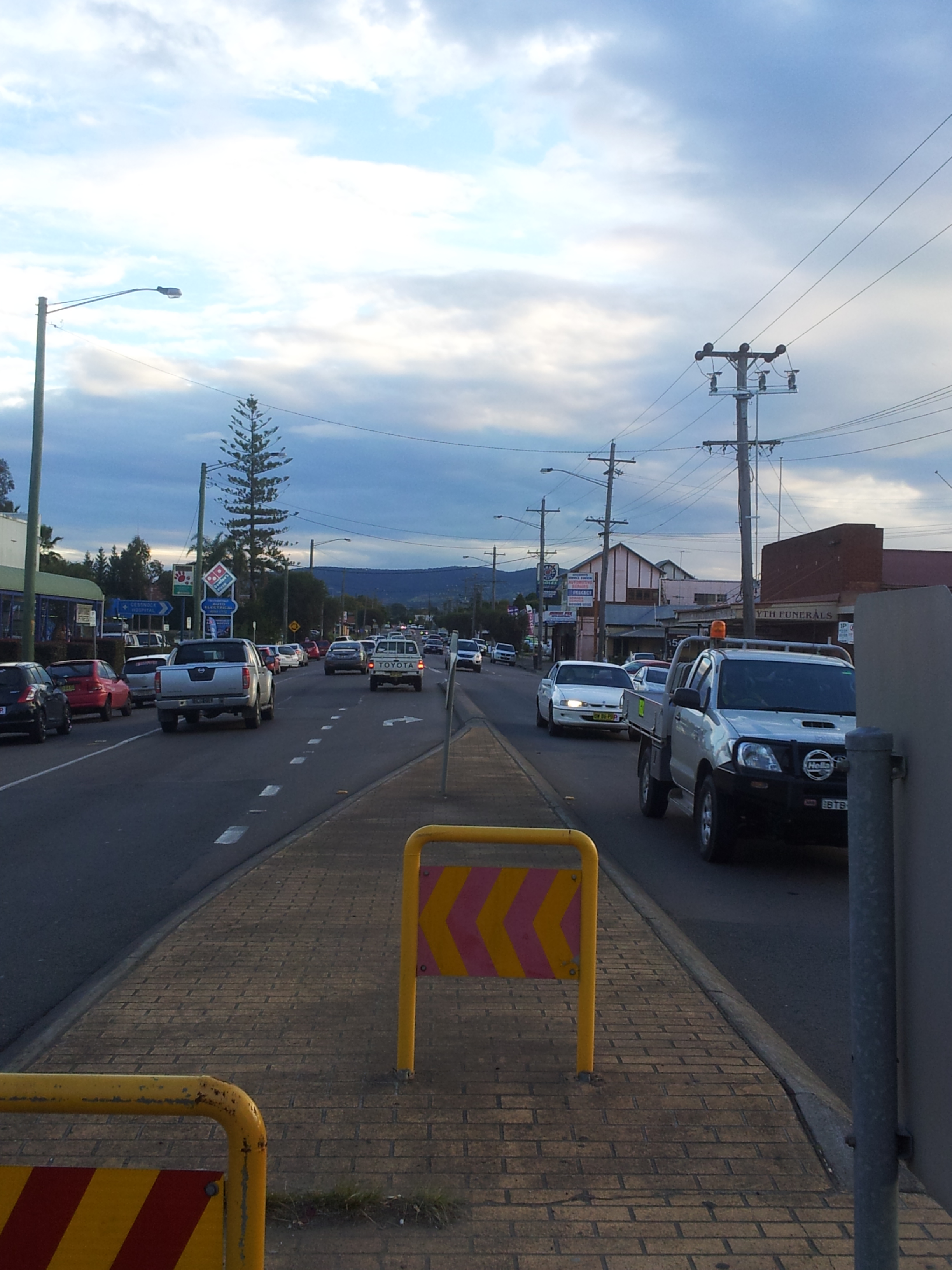
20130716_163210

Cessnock.

“Lucie? Lucie Robson, right?”

The mayor of Cessnock recognised me on sight. I was amazed, having never set eyes on him before, or so I believed. He went to to explain that his son, who has now graduated from Law, was a friend of mine in preschool.

And so it is in Cessnock, where faces from my childhood still abound and everybody smiles when they see you on the street. I grew up here and am back for a short time to fill in for an absent journalist at the local newspaper, The Cessnock Advertiser.

In my first week I drove around town with a camera, chatting to locals about neighbourhood disputes, new building projects, people winning awards and sporting competitions. The warmth and community spirit of everyone I met and worked with have really struck me.

I never much liked living in a town with only one of everything, where the exciting outside world was only accessible by driving for hours. Trips to the big smoke were like Christmas and left me longing to be in a place where you could just walk out your door and find a nice cafe, or some trendy people, or an art exhibition. Where Things were Happening. I wanted to be Sophisticated.

After six years of living in various cities around the world, I feel differently. As it turns out, there are plenty of things happening in Cessnock. Social problems remain, but the population seems to be growing and surprisingly enough, there is not enough space in the newspaper to fit all the stories in every week.

People still read the newspaper, too. The phone is off the hook with people wanting their stories or community notices to get printed, or booking classifieds for various occasions. The Advertiser has an important place in the town, even if a lot of it is classic “small town news”. And working as a reporter at the paper is a good insight into the glue that keeps the community together.

The Friday Daily – Spoken word artists in the studio

20130524_114248

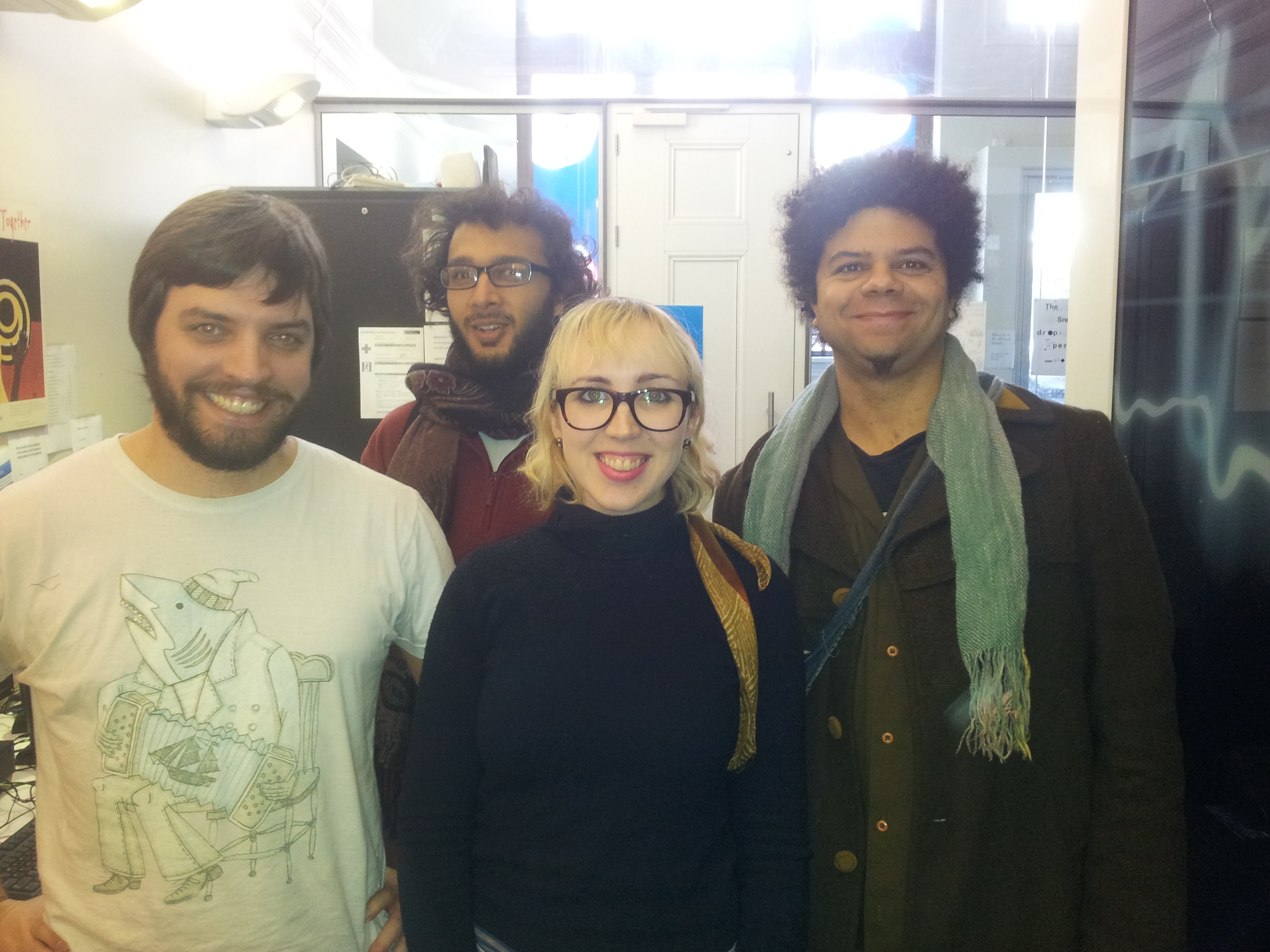
L-R Scott Sandwich, Jo Sri, yours truly and Miles Merrill.

This was the BEST FUN. Spoken word artists Scott Sandwich, Jo Sri and Miles Merrill came into the 2SER studios and performed live on the air. Their ways with words were really something.

The artists were out and about for Sydney Writers’ Festival, in collaboration with Word Travels.

This was first broadcast on May 24th’s Daily on 2SER.

Final Draft: Interview with Romy Ash

20130504_131536

https://lucierobson.com/wp-content/uploads/2013/05/romy-ash_interview-44100-hz.mp3

Congratulations to Romy Ash, whose first novel Floundering has been shortlisted for the Miles Franklin prize!

I spoke to the Melbourne writer and food blogger about the book, which is sparse and disturbing, but captures the feeling of driving across the Australian landscape like nothing else.

This interview was first broadcast on Final Draft, 2SER’s literature show, on May 4.


The Friday Daily – Wikileaks have a party

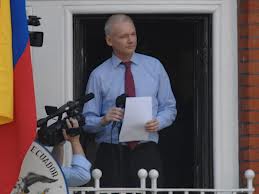
julian assange

The Wikileaks Party is now registered and set to run Senate candidates in Victoria (Julian Assange himself), NSW and WA. Last week’s poll by UMR Research suggests that 26 per cent of voters would consider voting for Wikileaks.

So what’s different about the Wikileaks Party? What kind of policies can we expect to see? I spoke to National Councillor Cassie Findlay for The Friday Daily on 2SER on April 26.

The Necklace

521312_10151032992669595_1905579425_n

“A part of me will always belong to you.” (Street art at Mauerpark, Berlin)

By the time I had the necklace, it was too late to find out anything about it. I had never seen my grandmother wear it, but somehow I knew that she must have loved it. An oval pendant with a cut-out design of hieroglyphics, it would have reminded her of dusty bazaar from whence it came, in the days when far fewer people were as worldly as my grandmother was. So then it was my turn to love it, just like she’d loved me.

In the middle of an otherworldly European summer, I was forced to farewell the man I was convinced was my Prince Charming. He went home, and home was on the other side of Atlantic. It felt like being dumped by a cold, heavy wave. I went back to Berlin alone, feeling smaller than ever in the big grey city. “Come to Paris!” said my best friend, who was on a glamorous trip around the continent. I sensed it would be my only opportunity to be so miserable in such a luxurious setting. I went, and wandered around the streets, and the sticky heat and sunshine were surprisingly good medicine. On holiday in the shimmering alternate universe of Paris, I could pretend that I was riding some warm current, ultimate destination unknown, and just drift.

I got my first inkling that the necklace was missing when I arrived in my next destination, the brainy city of Basel. I hadn’t slept and had just shot across the countryside in a super fast train. Everything was new, and the necklace was not around my neck. It must have been squashed in my bag. But over the next few days, it did not reappear. By the time I left, it was making me distinctly uneasy to think about it. I was missing its shape in my hand, the feel of the cold chain on the back of my neck, and just knowing that we were travelling through unknown landscapes together.

But I was in denial. Surely my necklace wouldn’t just be gone. It was much too important an artifact, and it was mine to take care of. I didn’t lose important things the way other people seemed to, did I? Especially when the necklace was one of my last remaining mementos of my grandma Ethel, who had been everywhere, and been everything to us. I could only fantasise about the stories that those little silver-plated Egyptian figures would tell. Everywhere I went, I had had it hanging on my chest. It was my go-to item of glamour, because I always imagined my grandmother wearing it and reminding herself of exciting times. Having been twice left mysteriously at other people’s houses, it had always found its way back to me – but my luck had run out.

It had travelled halfway around the world with me, and now might be left in a Parisian hostel, or in a French train, or somewhere else entirely.

My Swiss hosts hadn’t seen it. In fact, I hadn’t seen it. With a lump in my throat, I lodged a lost property report with the railways, and never got a response. My necklace had left me. Without my necklace, and my prince, I didn’t feel like I had much left to hold onto. I was losing pieces of my life, one at a time.
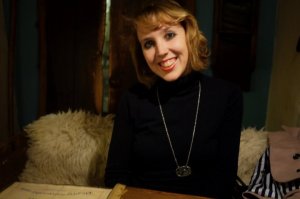
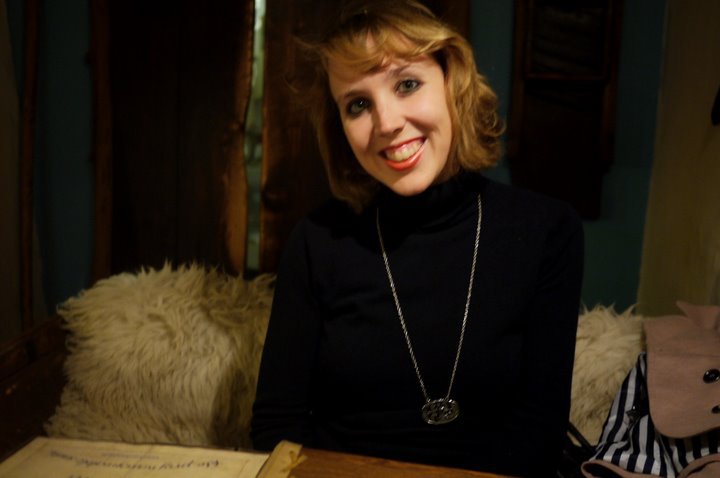
The necklace and me in happier times. (pic: Kate O'Dwyer)

The necklace and me in happier times. (pic: Kate O’Dwyer)

I felt like even if the necklace turned up and showed itself and told me about all its adventures, I wouldn’t be worthy of putting it back on. My grandfather trusted me with my grandmother’s necklace, and I had let her down – my Big Ma, the woman with a million stories and a heart as big as the whole blue sky.

Switzerland in summer was a Technicolor wonder. And travelling alone had become my cause. But without my necklace I was more alone than ever.

The Friday Daily – Fazil Say is not alone

Turkish pianist and composer Fazil Say

Turkish pianist and composer Fazil Say

This week acclaimed Turkish pianist and composer Fazil Say was given a suspended 10-month sentence for blasphemy on Twitter. Although the international community was surprised that this could happen in a historically secular country, Say’s case is not an anomaly. I spoke to Jess Hill, former Middle East correspondent at The Global Mail and ABC journalist, about freedom of expression in Turkey.

This was first broadcast on The Friday Daily on 2SER on April 19, which was also my first day as a presenter of The Daily.


Why Pete Campbell is the best character on Mad Men

madmenamsterdam

In defence of Pete Campbell.

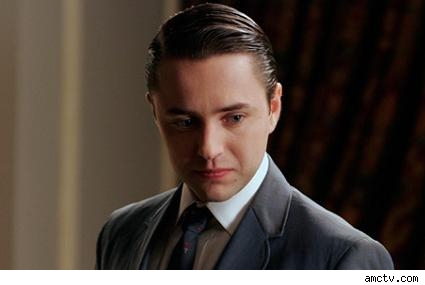
Well, not him exactly. Rather, in defence of Vincent Kartheiser’s performance. Am I the only one who thinks this? It’s spine-tingling.

As we all count down to when we can dive in to the world of Mad Men again, I’d like to make a tribute to a guy who doesn’t seem to get many tributes.

There is nothing unsettling about Mad Men – the unbelievably good acting and writing, the bright colours and perfect skin, the crispy sound design – except for the show’s strong undercurrent of pure, privileged misery, which is best personified in Pete Campbell.

I’ve read descriptions of Pete as a “villain”, or a character you “love to hate”, but in the Mad Men universe nothing is that simple. Pete is an antagonist, for sure, but he’s far from shallow – in those blue eyes we see all the shades of hatred, but also of despair, and it’s amazing to watch.

It’s not just Campbell’s ridiculously pompous sense of entitlement, a consequence of a a life spent getting everything for free, being a descendant of a gilded New York governor. His sneering insults and tantrums, delivered in that slimy WASP voice under his slick hair, can make your skin crawl. It’s not even his crippling jealousy of Don Draper in Season 1, his inability to reconcile his own lack of manliness and gravitas while someone he sees as unworthy gets all the praise and the ladies. Later, in Season 5, Pete tries out expensive infidelity for himself, trying to emulate the masculinity he sees in Don. It doesn’t make him feel more like a man, and Don is indifferent. I couldn’t help but feel Pete’s shame along with him.

What really sets Pete/Vincent apart is the big void inside of him, that money, status, women and a family in the country can’t fill. He has everything he could ever want, but it means nothing. He comes to hate the world, and himself, and it’s illustrated so perfectly. Kartheiser even says in this video that he imagines Pete Campbell committing suicide before he reached old age. This video below must be one of the best examples of the whole point of Mad Men – the ultimate nothingness of materialism and the futility of the American Dream. And who better to demonstrate this, than Pete Campbell.

(P.S. If a better television sequence is ever made, I don’t want to know about it.)


The Friday Daily – Treasure buried under the Timor Sea

Sunset Triangle - nate2b (Flickr)

Sunset Triangle – nate2b (Flickr)

https://lucierobson.com/wp-content/uploads/2013/03/greater-sunrise-fields.mp3

Around 7 years ago Australia and East Timor signed an unusual treaty called the CMATS. This ensured that some important revenue – from billions of dollars’ worth of oil and gas under the Timor Sea – would be split 50/50. Up until now nobody has decided how to process the resources, which means that the treaty can now be ended unilaterally. Why would East Timor end the treaty? Because if permanent maritime borders were drawn up, all the oil and gas might belong to them.

This story was first broadcast on The Friday Daily on 2SER, on March 15.