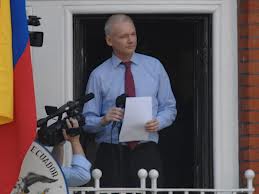
The Wikileaks Party is now registered and set to run Senate candidates in Victoria (Julian Assange himself), NSW and WA. Last week’s poll by UMR Research suggests that 26 per cent of voters would consider voting for Wikileaks.
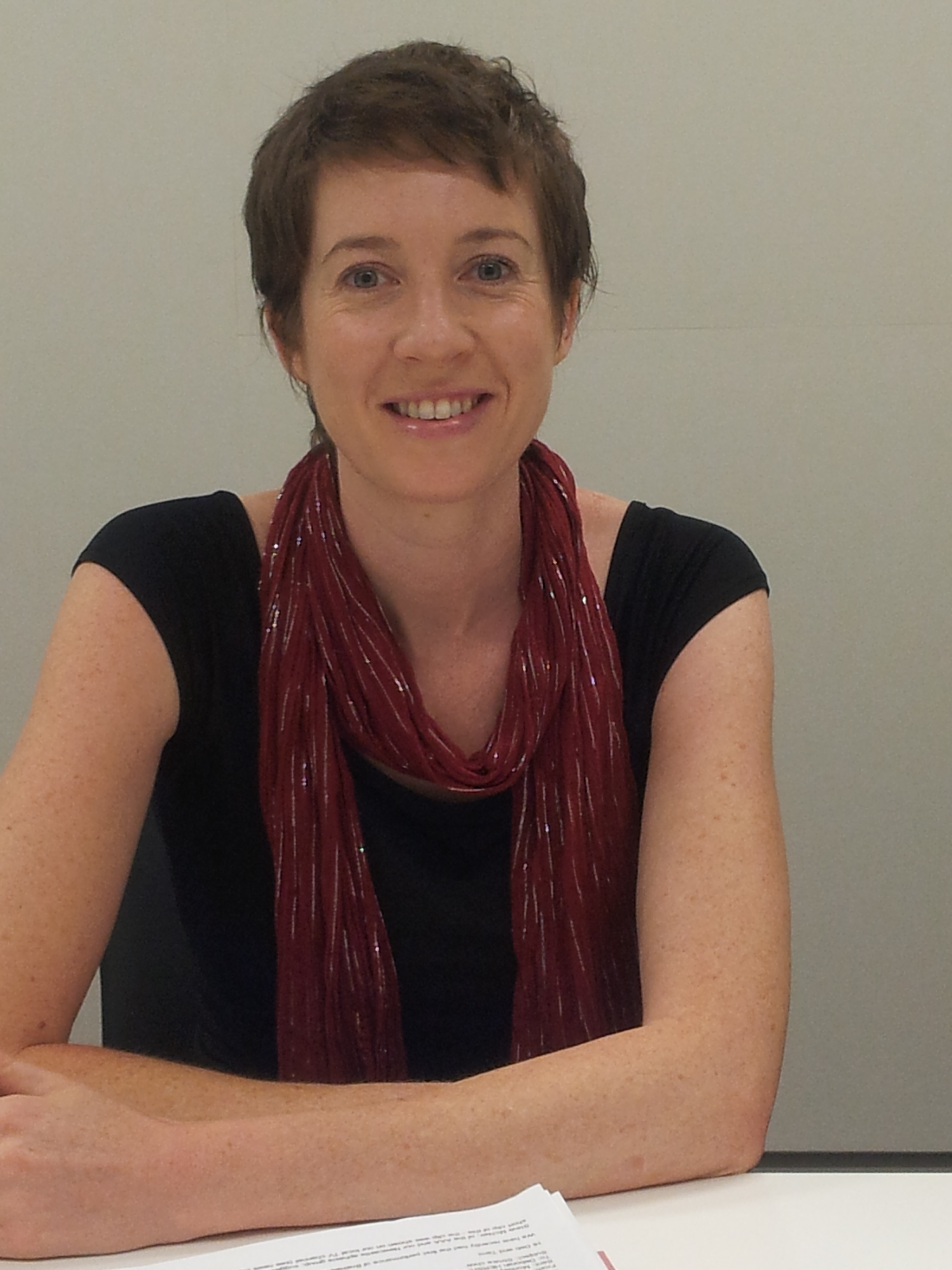
So what’s different about the Wikileaks Party? What kind of policies can we expect to see? I spoke to National Councillor Cassie Findlay for The Friday Daily on 2SER on April 26.
This week acclaimed Turkish pianist and composer Fazil Say was given a suspended 10-month sentence for blasphemy on Twitter. Although the international community was surprised that this could happen in a historically secular country, Say’s case is not an anomaly. I spoke to Jess Hill, former Middle East correspondent at The Global Mail and ABC journalist, about freedom of expression in Turkey.
This was first broadcast on The Friday Daily on 2SER on April 19, which was also my first day as a presenter of The Daily.
Queensland Health has many changes in store. One big issue is health workers losing their jobs. This is affecting remote indigenous communities in the far north, who might not have anywhere else to turn.
It’s an issue of economic reform in Queensland, but are people’s livelihoods too big a cost to pay for a stable economy? And who’s actually to blame for major funding cuts?
For more information on this issue check out these other reports:
Today on The Friday Daily we took a look at wealth in Australia. Like many people, I don’t like talking about money but some things need to be said. If people are “struggling” on an income of $250 000 a year, they need to reassess their priorities. Not being able to afford all your heart’s desires does not mean you are finding it tough to get by. There are people in every neighbourhood in Australia who can’t afford to go to the dentist or replace their broken shoes. I’m sure they’d love to struggle on a quarter of a million dollars each year.
This piece was rebroadcast on the Community Radio Network’s On The Money on April 15.
Sydney musician Eve Klein, as Textile Audio, has released an intriguing experimental opera record called The Pomegranate Cycle. I spoke to Eve about what it means to create a “woman-centred” opera.
A radio documentary I made about the BrainWaves choir in Newcastle, which is a collaboration between Bernadette Matthias and the stroke team at Hunter New England Health. Sound and production supervision by Belinda Lopez. Broadcast on March on 16 on All The Best, which is produced at FBi and distributed on the Community Radio Network.
Bernadette Matthias
This was a major project for me and I was pretty humbled to meet Bernadette, Belinda and Bryan and hear their stories of tragedy and subsequent healing through music. It was a great experience to put this piece together and I’m pleased that people have enjoyed listening to it, and learning something about what can be achieved when people work together to find new ways to get through the dark times in life.
Around 7 years ago Australia and East Timor signed an unusual treaty called the CMATS. This ensured that some important revenue – from billions of dollars’ worth of oil and gas under the Timor Sea – would be split 50/50. Up until now nobody has decided how to process the resources, which means that the treaty can now be ended unilaterally. Why would East Timor end the treaty? Because if permanent maritime borders were drawn up, all the oil and gas might belong to them.
This story was first broadcast on The Friday Daily on 2SER, on March 15.
A few days ago Stephen Conroy announced long-awaited media reforms – and in one sense, all hell has broken loose. One of the reforms that is still undecided is the “75 per cent reach rule” which up until now has meant that one person or company is not permitted to own licenses to broadcast to more than 75 per cent of the Australian population. Rumours of a change prompted more rumours of a big merger in the works – Southern Cross Media and Nine Entertainment Co. So it could be great for business – but it could actually be bad for regional media. I recently spoke to Dr Vincent O’Donnell about this. He is an associate of the School of Media and Communication at RMIT, and says that regional Australian communities could potentially miss out on television content that is relevant to them. You can hear the interview by clicking on the link above.
“This International Women’s Day I am grateful that I have lived to be 23 without dying in childbirth, being raped, forced into marriage or prostitution or denied an education. It’s not a ridiculous thing to say – it’s a tragedy of our times that not every woman around the world can say the same.”
Last Friday I posted this status on Facebook. It was completely sincere, and I was humbled by how much response I got from people, including those who shared it for their own friends. I am grateful that I live here in Australia and am taking full advantage of all the freedoms afforded to me, those fought for by all the strong women who came before. But at the same time I think we shouldn’t have to be “thankful” that women have the same freedoms as men – we should assume that all women have those freedoms, and shouldn’t have to fight for them, and if they are not being respected, then that is a call to action.
I recorded this interview with Karen Willis, the Executive Officer of the NSW Rape Crisis Centre, to play on 2SER for the special programming for IWD. Even though “victim-blaming” is getting talked about a lot in the public sphere recently, conversations I have on a daily basis, even with my family (“You’re too pretty to walk by yourself at night!” says my grandmother), show that women are still blamed for becoming the objects and victims of male aggression.
On Friday morning I read this article about a proposal to introduce “pink carriages” for women and children using trains at night. It seemed to be partially Karen’s idea but since the interview had already happened, I didn’t get to ask her anything about it. My first reaction to the pink carriage idea was positive – “I would totally use them!” I thought. More secure carriages to travel in at night? Yes, please. However, while it is no doubt being proposed with the best of intentions, the pink carriage plan is a cop-out. Once again, it enforces the idea that women need to do more things to protect themselves, or be protected, from violence. In the same way that enforcing a curfew on women to protect them from serial rapists is illogical – the women are not doing the raping – segregating women on trains to protect them doesn’t put any onus on the (presumably from the looks of it) men to stop harassing them. Because I just know that if a woman is assaulted elsewhere on the train, people will ask why she wasn’t in the pink carriage.
So even though we’ve all had a gutful, it’s a conversation that we need to keep having, and having, and having, until it’s not considered reckless for a young woman to go where she pleases, no matter the time of day or night.
The story was played on The Friday Daily on 2SER yesterday (March 1).
This would probably be my least favourite “debate”. Growing up with a doctor as parent and grandparent, it has always upset me that some people don’t trust their doctors, or worse, are sceptical of the expertise of doctors and scientists who have dedicated years to study and research.
However, it’s important to acknowledge that whenever people have a choice, some will exercise that choice and their reasons can be diverse. Vaccination is a complex issue and emotions can run high in the debate, which can prevent people from understanding each other’s position. Which is what I have tried to do.





 Lucie Heather Ethel